
Handling 1 Million Transactions per Second
Results at a Glance
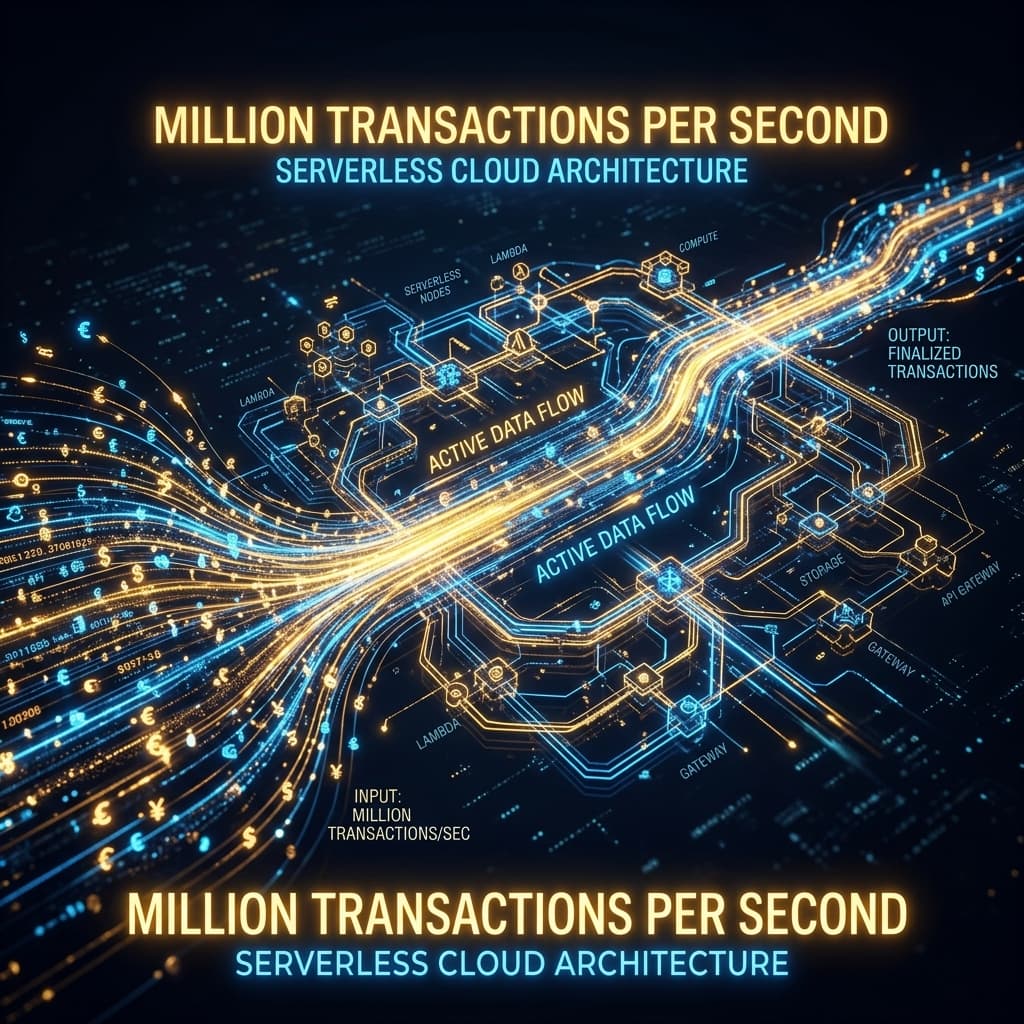
PayStream Inc., a high-growth payment gateway in Asia, was struggling under the weight of their own success. During major e-commerce flash sales, their traditional server-based architecture buckled, leading to failed transactions, timeouts, and furious merchants. Nexentity executed a radical pivot, redesigning their entire core processing engine utilizing a 100% serverless architecture written in Go, allowing them to handle unprecedented scale instantly while drastically cutting costs.
The Challenge & Bottlenecks
Architecture & Stack
The core technologies utilized in this deployment.
Engineering Architecture & Strategy
Instant Scaling
Architecture scales from zero to a million concurrent requests in milliseconds.
Idempotent Processing
Guarantees that no payment is ever processed twice, regardless of network retries.
Pay-Per-Execution
Infrastructure costs drop to absolute zero when the system is idle.
Extreme Concurrency
Go's goroutines allow for incredibly fast concurrent payment validations.
Implementation Timeline
Monolith Deconstruction
Analyzed the legacy Java monolith to identify boundaries for serverless functions.
Go Microservices
Rewrote the core transaction processing engine in heavily optimized Go.
NoSQL Modeling
Designed single-table DynamoDB schemas for sub-millisecond data access.
Load Testing
Subjected the system to 1M TPS synthetic load testing before production cutover.
The Final Results
"We used to fear peak trading hours. Now, we don't even look at the server metrics. Nexentity built us a payment engine that scales effortlessly and flawlessly."